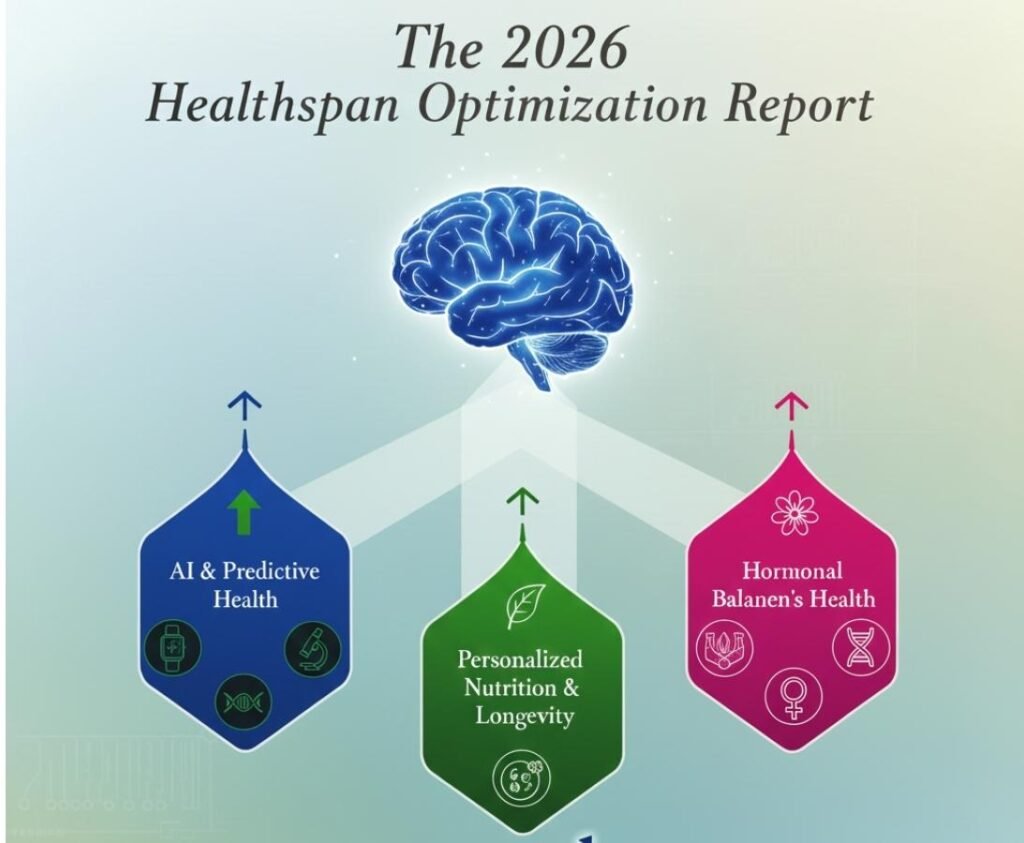
Beyond Lifespan: The 2026 Healthspan Optimization Report
The Paradigmatic Shift to Healthspan
As the global population approaches a demographic inflection point in 2026, the longevity sciences have undergone a fundamental philosophical and practical transformation. For decades, the primary objective of medical intervention was the extension of lifespan—the total chronological duration of existence. While successful in increasing average life expectancy, this singular focus has inadvertently created a public health crisis known as the “Healthspan Gap.” Current epidemiological data indicates that while humans are living longer, they are not necessarily living better; the average gap between total years lived and years spent in good health is approximately 9.6 years.1 This discrepancy implies that nearly a decade of the average modern life is characterized by morbidity, cognitive decline, and loss of functional independence.2
The prevailing mandate for 2026 is the optimization of healthspan—the period of life spent in robust health, free from chronic disease and disability.2 This shift is characterized by a move away from “anti-aging”—a reactionary stance against inevitable decline—toward “positive aging” and “active maintenance”.5 The emerging bio-medical consensus defines aging not as a fixed chronological slide but as a malleable biological process driven by specific, treatable mechanisms: mitochondrial dysfunction, genomic instability, cellular senescence, and chronic inflammation.3
This report provides an exhaustive analysis of the five critical longevity habits that define the 2026 healthspan protocol. Synthesized from advanced clinical research and emerging trends in geroscience, these pillars—Precision Nutrition, Metabolic Movement, Hormetic Stress, Circadian Architecture, and Neuro-Optimization—represent the convergence of biological insight and technological capability. The analysis explores how the integration of Glucagon-like peptide-1 (GLP-1) companion therapies, the rise of mitochondrial geroprotectors like Urolithin A, and the adoption of neuro-athletic training are reshaping the human experience of aging.
Part I: The Biological Foundation of 2026
1.1 The Healthspan Gap and the Longevity Economy
The disparity between life expectancy and healthy life expectancy is the central challenge of modern medicine. The “Healthspan Gap” represents a significant economic and societal burden, with the average American spending more than 12 years in poor health at the end of life.3 This reality has catalyzed the “Longevity Revolution,” a seismic shift in healthcare where aging is viewed as a modifiable risk factor rather than an inevitability.3
In 2026, the longevity market is maturing from a niche interest of biohackers into a mainstream medical imperative. This maturation is driven by the “Silver Tsunami”—the aging of the Baby Boomer generation and Generation X—who are demanding interventions that preserve vitality and cognitive function well into their 80s and 90s.3 The focus has shifted from “lifespan extension” (adding years to life) to “healthspan optimization” (adding life to years), a distinction popularized by researchers at the Mayo Clinic and other leading institutions.4
1.2 Biomarkers of Aging: The Epigenetic Clock
A critical enabler of this shift is the ability to measure aging with precision. In 2026, chronological age is increasingly viewed as an irrelevant metric compared to biological age. The widespread adoption of epigenetic clocks—tests that analyze DNA methylation patterns to estimate the rate of cellular aging—has provided a verifiable metric for healthspan interventions.1
These advanced diagnostics, such as GrimAge and DunedinPACE, have moved beyond simple estimations to become predictive tools for mortality and chronic disease risk.8 They allow for the “quantification of self,” enabling individuals to assess the efficacy of lifestyle interventions in real-time. The 2026 trend is toward “organ-specific” aging clocks, recognizing that the liver, heart, and brain may age at different velocities within the same individual, necessitating targeted rather than systemic interventions.8
Part II: Precision Nutrition and Metabolic Maintenance
The nutritional landscape of 2026 has transcended the “one-size-fits-all” diet. It is now defined by precision nutrition—interventions tailored to genetic predispositions, microbiome composition, and specific pharmaceutical contexts. The most significant development in this domain is the restructuring of dietary protocols to support metabolic therapies and the targeted use of geroprotective compounds to induce cellular renewal.
2.1 The GLP-1 Companion Protocol: Defending Lean Mass
The widespread prescription of GLP-1 agonists (e.g., semaglutide, tirzepatide) for weight management and metabolic health has necessitated the creation of “GLP-1 Companion Nutrition”.5 While these medications effectively address obesity and insulin resistance, they present a distinct physiological risk: the loss of lean muscle mass (sarcopenia) and bone density alongside adipose tissue.10
The Sarcopenia Risk and Protein Architecture
GLP-1 agonists function by delaying gastric emptying and suppressing central appetite signaling, often leading to a profound caloric deficit.10 Without strategic nutritional support, this can result in “sarcopenic obesity”—a condition where an individual has a normal weight but insufficient muscle mass to support metabolic health and functional independence.
To counteract this, the 2026 protocol emphasizes a rigorous protein architecture. For the general population, protein requirements have traditionally been modest. However, for those on GLP-1 therapies or adults over 65 facing “anabolic resistance” (the reduced ability of muscle to synthesize protein in response to intake), requirements are significantly higher.12
2026 Protein Optimization Table
Demographic Profile
Protein Requirement
Strategic Rationale
Maintenance (<65 years)
0.31 – 0.36 g/lb
Moderate intake to manage mTOR activation and promote autophagy.12
Active Aging (>65 years)
0.45 – 0.54 g/lb
Increased intake to overcome anabolic resistance and prevent frailty.12
GLP-1 Therapeutic User
1.0 – 1.5 g/kg (~0.7 g/lb)
Critical preservation of lean tissue; protein must be consumed first at meals due to early satiety.14
The Fiber Imperative and Gut Health
A secondary challenge of GLP-1 therapy is gastrointestinal stasis, leading to constipation and microbiome dysbiosis. The 2026 nutritional standard mandates a high-fiber intake (minimum 30g daily) derived from diverse plant sources to maintain motility and support the gut-brain axis.11 “Companion foods” now include nutrient-dense, lower-volume options like berries, legumes, and specific prebiotics to ensure micronutrient sufficiency despite reduced food volume.15
2.2 Geroprotective Supplementation:
The Mitochondrial Revival
Beyond macronutrients, the longevity strategy of 2026 relies on “geroprotectors”—compounds that intervene in the biological pathways of aging, specifically mitochondrial dysfunction and cellular senescence.
The Shift from NMN to Urolithin A
For years, Nicotinamide Mononucleotide (NMN) was the cornerstone of mitochondrial supplementation as a precursor to NAD+. However, 2026 sees a decisive pivot toward Urolithin A (UA). This shift is driven by two factors: regulatory/stability concerns regarding NMN and the superior mechanism of action of UA.7
Mechanism of Action: While NMN fuels existing mitochondria, Urolithin A triggers mitophagy—the selective identification and recycling of defective mitochondria into new, efficient organelles.7 This “cellular cleanup” is essential for preventing the accumulation of metabolic waste that drives aging.
The Microbiome Barrier: Urolithin A is naturally produced by gut bacteria after consuming ellagitannins (found in pomegranates and walnuts). However, only ~40% of the human population possesses the specific microbiome ecology to perform this conversion. Thus, direct supplementation (e.g., Mitopure) has become the gold standard for ensuring efficacy.7
Purity and Regulation: Recent analyses by the National University of Singapore revealed significant quality control issues in the NMN market, with many products containing undetectable levels of the active ingredient.18 Conversely, Urolithin A has demonstrated a consistent safety profile and stability, positioning it as the premier mitochondrial intervention for 2026.18
Creatine: The Cognitive Nootropic
Creatine monohydrate has shed its reputation as solely a bodybuilding supplement to become a primary tool for cognitive longevity. The brain is highly metabolically active, consuming 20% of the body’s energy. Creatine acts as a rapid-response energy buffer, regenerating ATP during high-demand cognitive tasks.19
Clinical trials have highlighted creatine’s potential in mitigating neurodegenerative decline. Pilot studies involving Alzheimer’s patients utilized high doses (up to 20g daily) to achieve an 11% increase in brain creatine levels, correlating with improved working memory and fluid intelligence.20 For the general aging population, a maintenance dose of 3-5g daily is recommended to support both muscle retention (sarcopenia defense) and cognitive reserve.22
2.3 The Longevity Diet Framework
The dietary consensus for 2026, championed by researchers like Dr. Valter Longo, integrates these elements into a “Longevity Diet.” This framework is primarily plant-based (pescatarian), low in saturated fats and refined sugars, and incorporates time-restricted eating (12-hour feeding window) to support metabolic flexibility.13
Macronutrient Split: High complex carbohydrate (vegetables/legumes), moderate protein (mostly plant/fish), and healthy fats (olive oil/nuts).12
Fasting Mimicking: Periodic cycles of Fasting Mimicking Diets (FMD) are used to trigger systemic autophagy and reset metabolic markers without the stress of water-only fasting.23
Part III: Movement as Medicine – Structure and Stability
In 2026, the concept of “exercise” has been refined into “Movement Architecture.” The objective is not merely caloric expenditure but the stimulation of specific physiological adaptations: mitochondrial density, structural stability, and telomere maintenance. This approach replaces the “weekend warrior” model with a structured regimen of Zone 2 training, heavy loading, and frequent “movement snacks.”
3.1 Zone 2 Training: Metabolic Flexibility
Zone 2 training is the foundation of cardiovascular longevity. It is defined as a specific metabolic state where the body generates ATP primarily through the oxidation of fat within the mitochondria, keeping lactate levels below 2 mmol/L.24
Physiological Mechanism:
Aging is characterized by metabolic inflexibility—the inability to efficiently switch between fuel sources. Zone 2 training stimulates mitochondrial biogenesis (the creation of new mitochondria) and improves the efficiency of the electron transport chain.25 This intensity is crucial because it strengthens the aerobic base without accumulating systemic fatigue or oxidative stress, allowing for high-frequency training.24
The 2026 Zone 2 Protocol:
Intensity Metric: 60–70% of Maximum Heart Rate, or the “Talk Test” (able to speak in full sentences but unable to sing).24
Volume: 150–300 minutes per week, divided into 4–5 sessions of 45–60 minutes.24
Modality: Low-impact activities such as rucking, cycling, or incline walking are preferred to preserve joint health for the long term.25
3.2 Structural Integrity: The Weighted Vest Revolution
While Zone 2 builds the “engine,” structural training builds the “chassis.” Osteopenia (bone loss) and frailty are leading causes of mortality in the elderly. The 2026 fitness landscape has embraced weighted vests as a primary tool for “active loading”.26
Wearing a weighted vest provides a constant, manageable axial load that stimulates osteoblasts (bone-building cells) through the piezoelectric effect, without the high shear forces of heavy spinal loading in a gym setting. This is particularly effective for older adults, allowing them to “trick” the skeletal system into maintaining the bone density of a heavier body weight.26
Hybrid Fitness Trends:
The integration of strength and endurance—”Hybrid Fitness”—is a dominant trend. Athletes no longer choose between being a runner or a lifter; they train concurrently to build a resilient, adaptable body capable of diverse physical demands.26
3.3 Movement Snacks and Telomere Biology
Perhaps the most accessible longevity intervention of 2026 is the “Movement Snack.” Research published in Nature Aging (2025) has established a direct link between the frequency of movement and cellular aging. Hourly microbursts of activity (3–5 minutes) were shown to increase telomere length, the protective caps on DNA that shorten with age.27
The “Movement Snack” Protocol:
Trigger: Every 60 minutes of sedentary time.
Action: 2–5 minutes of dynamic movement (e.g., air squats, stair climbing, walking).
Biological Effect: These interruptions regulate post-prandial glucose spikes, lower chronic inflammation, and signal cellular repair pathways.27 This habit transforms sedentary behavior from a passive state into an active recovery interval.
Part IV: Hormetic Stress and Environmental Adaptation
Longevity is not achieved by avoiding stress, but by mastering it. The concept of hormesis—applying short, controlled bursts of stress to trigger adaptive resilience—is central to the 2026 healthspan strategy. This habit focuses on thermal regulation (sauna and cold) and the controversial frontier of peptide therapy.
4.1 Hyperthermic Conditioning (Sauna)
Sauna therapy has graduated from a wellness luxury to a medical-grade intervention. Regular heat exposure mimics the physiological effects of moderate cardiovascular exercise, inducing vasodilation, increased heart rate, and sweating.29
Mechanism: Heat Shock Proteins (HSPs)
The primary longevity benefit of sauna is the activation of Heat Shock Proteins (specifically HSP70). These molecular chaperones repair misfolded proteins, scavenge free radicals, and prevent the protein aggregation associated with neurodegenerative diseases like Alzheimer’s.30 Large-scale observational studies confirm that frequent sauna use is associated with a significant reduction in fatal cardiovascular events and all-cause mortality.31
Optimal Longevity Sauna Protocol 29:
Temperature: 175°F – 195°F (80°C – 90°C) for traditional sauna; 120°F – 135°F for infrared.
Duration: 15–20 minutes per session (Traditional); 30–45 minutes (Infrared).
Frequency: 4–7 sessions per week.
Timing: Post-exercise to amplify growth hormone release and recovery.
4.2 Cold Water Immersion (CWI)
Cold exposure activates a distinct set of survival pathways. The shock of cold water triggers a massive release of norepinephrine (up to 500%), a neurotransmitter that enhances focus, mood, and vigilance.29
Metabolic Impact:
CWI activates Brown Adipose Tissue (BAT), a metabolically active fat that burns glucose and lipids to generate heat (thermogenesis). This improves insulin sensitivity and mitochondrial function.30
Optimal Cold Protocol 31:
Temperature: 45°F – 60°F (7°C – 15°C).
Duration: 1–3 minutes per session.
Total Volume: ~11 minutes per week is the threshold for metabolic benefits.
Safety: The “after-drop” phenomenon requires gradual rewarming. It is critical to end on cold (allow the body to reheat naturally) to maximize metabolic burn, unless muscle hypertrophy is the goal, in which case cold should be avoided immediately post-hypertrophy training.33
4.3 The Peptide Frontier: BPC-157 and Regulatory Tension
In the quest for accelerated recovery, the peptide BPC-157 (Body Protection Compound) has become a focal point of the 2026 biohacking landscape. Derived from a protein found in stomach acid, BPC-157 is hypothesized to accelerate soft tissue repair (tendons, ligaments) and reduce systemic inflammation.34
The Regulatory Paradox:
Despite its popularity in the “gray market” and endorsements by influencers, BPC-157 occupies a precarious legal status.
FDA Stance: The FDA has classified BPC-157 as a high-risk compounded drug, effectively banning its use in compounding pharmacies due to a lack of human safety data and potential risks of immunogenicity.35
Athletic Ban: The World Anti-Doping Agency (WADA) has prohibited BPC-157 at all times, categorizing it as an unapproved substance.37
Clinical Reality: While animal studies show promise for injury healing, human clinical trials remain scarce. The 2026 consensus urges caution, prioritizing established hormetic tools (sauna/cold) over experimental peptides until safety profiles are definitively established.34
Part V: Circadian Architecture and Sleep Optimization
Sleep in 2026 is recognized as the single most effective performance-enhancing intervention. It is the period of neuro-cleaning, cardiovascular recovery, and hormonal resetting. The focus has shifted from “sleep duration” to “sleep architecture”—the quality and timing of sleep phases.
5.1 The Glymphatic System and Neuro-Cleaning
The brain possesses a waste clearance system known as the Glymphatic System, which is 10 times more active during deep non-REM sleep. This system flushes out neurotoxins, including beta-amyloid and tau proteins, which are implicated in Alzheimer’s disease.38 Disruptions in sleep architecture prevent this cleaning process, directly accelerating neurocognitive aging.
5.2 Cardiovascular Resilience: The Nocturnal Dip
Healthy sleep is characterized by a “nocturnal dip” in blood pressure (10–20% lower than daytime levels). This dip acts as a “holiday” for the cardiovascular system. The absence of this dip—often caused by short sleep (<6 hours) or sleep apnea—keeps the cardiovascular system under constant sympathetic stress, significantly increasing the risk of stroke and heart attack.39
2026 Sleep Optimization Strategy 27:
Light Anchoring: Viewing natural sunlight within 30 minutes of waking anchors the circadian rhythm, triggering cortisol release (for alertness) and setting the timer for melatonin release 12–14 hours later.
Temperature Gating: The body’s core temperature must drop by 1-2°F to initiate sleep. 2026 protocols involve automated mattress cooling and ensuring the bedroom environment is 65°F–68°F.
Regularity: Going to bed and waking at the same time (±30 minutes) daily is proven to lower C-reactive protein (CRP) more effectively than “catching up” on sleep on weekends.
5.3 Wearable Integration and HRV-Guided Living
The wearable technology market of 2026 has evolved from passive tracking to predictive coaching. Devices now utilize Heart Rate Variability (HRV)—the variation in time between heartbeats—as a proxy for nervous system status.41
HRV-Guided Protocols:
High HRV: Indicates parasympathetic dominance (rest-and-digest). The body is primed for high-intensity stress (e.g., HIIT, heavy lifting).42
Low HRV: Indicates sympathetic dominance (fight-or-flight). The body is under stress (illness, overtraining, poor sleep). The protocol shifts to active recovery (Zone 2, walking, yoga) to prevent burnout.41
This data-driven feedback loop ensures that longevity interventions do not become stressors themselves, allowing for autoregulation of training loads.
Part VI: Neuro-Optimization and the Oral-Brain Axis
The final frontier of 2026 healthspan optimization is the preservation of cognitive function. New research has illuminated unexpected connections between peripheral health (specifically the mouth) and the brain, leading to novel “Neuro-Athletic” interventions.
6.1 The Oral Microbiome: A Window to the Brain
A profound insight in geroscience is the connection between oral health and neurodegeneration. Pathogenic bacteria such as Porphyromonas gingivalis, the primary driver of gum disease, have been identified in the brains of Alzheimer’s patients.43
Mechanism: Leaky Gums:
Chronic gum inflammation leads to “leaky gums,” allowing oral bacteria and inflammatory cytokines to enter the bloodstream. These pathogens can cross the blood-brain barrier, triggering neuro-inflammation and the production of beta-amyloid plaques as a defense mechanism.43
2026 Oral Optimization Protocol:
Salivary Diagnostics: Routine testing of the oral microbiome to detect dysbiosis before clinical symptoms appear.43
Remineralization: The use of hydroxyapatite toothpaste to repair enamel and support the oral barrier.44
Therapy: Red light therapy applied to the gums to reduce inflammation and stimulate collagen production.8
6.2 Neuro-Athletics and Dual-Task Training
To maintain neuroplasticity—the brain’s ability to form new neural connections—physical training has evolved into “Neuro-Athletics.” This discipline uses Dual-Task Training, which compels the brain to process cognitive challenges while performing motor tasks.45
The Cognitive Benefit:
While simple exercise increases blood flow, complex exercise stimulates the release of Brain-Derived Neurotrophic Factor (BDNF). Dual-tasking (e.g., performing mental arithmetic while balancing on a stability ball, or reacting to color-coded light signals during agility drills) engages the prefrontal cortex (executive function) and the parietal lobe (spatial awareness) simultaneously.46
Clinical Efficacy:
Studies indicate that dual-task training is superior to single-task exercise for improving memory, attention, and executive function in older adults. Furthermore, it significantly reduces the risk of falls—a critical longevity metric—by training the brain to maintain balance under cognitive distraction, simulating real-world scenarios.48
Part VII: Conclusion – The Convergent Path
The longevity landscape of 2026 is defined by the integration of systems. It is no longer sufficient to isolate diet, exercise, or sleep. The optimization of healthspan requires a nuanced understanding of how these five habits intersect and amplify one another.
Zone 2 Training (Habit 3) builds the mitochondrial density required for Precision Nutrition (Habit 2) to function efficiently.
Hormetic Stress (Habit 4) triggers cellular repair mechanisms that are consolidated and executed during Optimized Sleep (Habit 5).
Neuro-Athletics (Habit 6) ensures that the physically resilient body is governed by a sharp, adaptable mind, protected by the systemic health of the Oral Microbiome.
By adopting these evidence-based, data-driven habits, individuals in 2026 are not merely attempting to live longer. They are engineering a biological reality where the later decades of life are characterized by vitality, contribution, and functional independence. This is the essence of bridging the Healthspan Gap: transforming the inevitability of aging into an opportunity for continuous optimization.