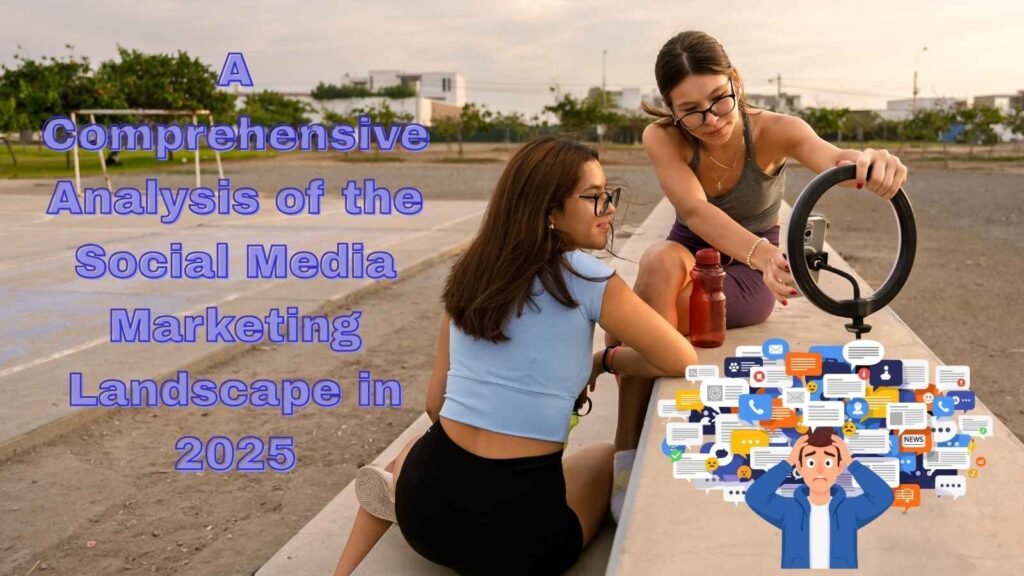
The digital landscape has undergone a seismic shift, moving us from an era of passive connectivity to one of aggressive, algorithmic performance. If you are involved in Social Media Marketing today, you know that the old playbooks no longer apply. We are looking at a world where approximately 5.42 billion individuals—about 65.7% of the global population—are actively engaging with these platforms. But they aren’t just scrolling through one feed; the average user navigates nearly seven different platforms every single month. This fragmentation has forced organizations to abandon monolithic strategies in favor of nuanced, platform-specific methodologies.
It is no longer enough to simply post content and hope for the best. The friction between discovery and purchase has been all but eliminated, and the “digital square” has become a highly specialized ecosystem. To succeed, you must prioritize creative disruption over rigid brand consistency. This article dives deep into the state of the industry in 2025, exploring how artificial intelligence, integrated commerce, and radical authenticity are reshaping how we connect. We will look at why vanity metrics are dead, how the “interest graph” has overtaken the “social graph,” and why short-form video is the only currency that matters.
The New Rules of Social Media Marketing Strategy
For years, social strategy was synonymous with brand consistency. The goal was to ensure that logos, tones, and messaging were identical across every single touchpoint. In 2025, however, this approach has been rendered obsolete by the trend of creative disruption. Modern social teams are increasingly authorized to ditch strict consistency to push creative boundaries because the algorithms favor engagement above all else. Engagement today is driven by entertainment value rather than corporate polish.
This strategic bifurcation means a brand might maintain a professional, thought-leadership-focused demeanor on LinkedIn while simultaneously deploying unhinged, meme-centric humor on X or TikTok to capture the cultural zeitgeist. This allows brands to resonate with the distinct psychological states of users on different apps. You must meet the professional in the boardroom and the consumer in the living room without conflict. The strategy must also define the target audience with granular precision, relying on psychographic data to understand online behaviors rather than just basic demographics.
Why the Content Calendar Has Changed Forever
Planning remains the operational backbone of any successful campaign, ensuring a consistent presence in a chaotic feed. With three billion people using social media daily, the competition for attention is fierce. However, we are now facing a consistency paradox. While algorithms reward regular posting, they punish stale, pre-canned content that fails to react to real-time cultural moments. The ratio of planned versus reactive content has shifted dramatically.
Successful brands now leave significant white space in their calendars to accommodate trendjacking. This is the practice of capitalizing on fleeting viral moments or memes. It requires a planning infrastructure that is agile enough to approve and publish content within hours, rather than weeks. Furthermore, the format matters more than ever. The dominance of short-form video across TikTok, Instagram Reels, and YouTube Shorts has made vertical video the lingua franca of the internet. Planning strategies must prioritize video-first workflows where static images are merely derivative assets.
The Rise of Outbound Engagement
Social listening has evolved from a defensive mechanism used to monitor complaints into an offensive strategic weapon. In 2025, listening is the foundation of the performance marketing era, driving insights that inform product development and competitive positioning. We have seen a massive shift from inbound engagement, where you respond to comments directed at you, to outbound engagement.
This trend sees brands proactively dropping into the comments sections of creators to pick up new audiences. By participating in conversations on viral posts that are not about them, brands can achieve micro-virality and humanize their presence. This requires a listening strategy that identifies trending discussions relevant to the brand’s niche, not just mentions of the brand name itself. Additionally, advanced sentiment analysis allows you to detect a shift in the vibe before it becomes a crisis, enabling proactive measures to address dissatisfaction.
Understanding AI in Marketing: Your New Creative Partner
By 2025, Generative AI has graduated from an experimental novelty to a standard, indispensable team member. It is no longer just about generating captions; AI in Marketing acts as a thought partner for strategists, integrated into the highest levels of campaign planning. The demand for content has outpaced human capacity, with brands aiming for dozens of posts per week to maintain algorithmic relevance.
AI facilitates this volume by creating audio-visual material at a speed previously impossible. Tools like OpusClip automatically slice long-form video into viral-ready shorts, while platforms like Adobe Express use generative fill to produce visual assets instantly. Beyond creation, AI is used for predictive analytics, forecasting which content topics are likely to trend based on historical data. However, as AI-generated content floods feeds, a counter-trend of transparency is emerging. Ethical brands are disclosing their use of AI to foster a culture of trust rather than deception.
The Era of Radical Brand Authenticity
Consumers are fatigued by the polished, highly produced aesthetic of the influencer era and are demanding radical authenticity. This shift is so profound that it is driving the creative disruption trend, where brands intentionally lower production quality to increase relatability. Personality now matters more than consistency. Brands are acting less like faceless corporations and more like chaotic, funny, or opinionated individuals.
This is evident in the rise of vibe culture. Social listening is now used to decode the mood and energy behind trends because it is not enough to know what people are talking about; you must understand how they are feeling. The pursuit of universal fame is being replaced by micro-virality, which focuses on dominating specific, high-intent niches. It is far better to be deeply relevant to a small community of potential buyers than mildly amusing to a massive, disinterested audience.
Social Search is the New SEO
Social media has usurped traditional search engines for brand discovery. In 2025, a staggering 58% of consumers report discovering new businesses via social platforms, outperforming traditional search and television. This shift necessitates a change in optimization strategies, making social SEO a critical discipline.
Captions, profiles, and on-screen text must be keyword-rich to ensure visibility in platform-specific search bars. For younger demographics like Gen Z and Alpha, TikTok is the primary information retrieval system, used to find everything from lunch recipes to financial advice. If your content is not optimized for these internal search engines, you are effectively invisible to a massive segment of the market.
Navigating the Platform Ecosystem
Understanding where to engage is as critical as knowing how to engage. The landscape is a fragmented archipelago of platforms, each with unique cultures. Meta remains the bedrock for commerce and broad reach. Instagram has evolved into a multi-functional platform, combining visual discovery with the commerce capabilities of Amazon. Facebook remains critical for reaching Gen X and Boomers, with Groups serving as effective tools for community building.
TikTok has solidified its position as a utility for information and entertainment. While originally a Gen Z stronghold, it has seen significant adoption among older demographics. LinkedIn has undergone a profound humanization transformation, becoming a vibrant content ecosystem for B2B networking. Meanwhile, niche players like Pinterest attract high-intent shoppers planning life events, and Reddit has become a critical touchpoint for authentic product research.
Social Commerce and the Collapse of the Funnel
Social Commerce is the most significant revenue opportunity in 2025. The U.S. market alone has reached $114.7 billion, driven by the removal of friction. Users can now go from seeing a product to owning it without ever leaving the app, collapsing the traditional marketing funnel into a single moment. Facebook remains the leading platform, but TikTok Shop is growing rapidly.
Live shopping has transitioned from a novelty to a core sales channel. These interactive events leverage the psychological triggers of scarcity and community to drive impulse purchases. However, logistical expectations remain high. Shoppers expect free delivery and returns, and failure to meet these standards leads to cart abandonment. Integrating user reviews and user-generated content directly into the shop interface is critical for providing the social proof necessary to close the sale.
Moving Beyond Vanity Metrics to Real Revenue
The era of vanity metrics like likes and follows is effectively over. In 2025, analytics are focused on social performance, connecting activity directly to business impact. You must answer the hard question of whether a post actually made money. This requires a shift from tracking engagement rates to tracking conversion paths using sophisticated attribution models.
The gold standard for reporting is a clear ROI formula that strips away the ambiguity of brand equity in favor of financial transparency. You must track metrics that indicate intent and action, such as saves and dark social shares. A save indicates intent to return, signaling high value, while a private share indicates a high level of endorsement. These metrics correlate much more strongly with conversion than public likes.
Content Strategy and the Video-First Mandate
Static images have their place, but short-form video is the primary growth lever across all platforms. Content strategy today is defined by the tension between automation and human connection. It is not enough to simply repost a video from one platform to another; content must be optimized for the specific interface and cultural norms of each app.
The most effective videos hook the viewer in the first three seconds and deliver value within fifteen seconds. Completion rate is a key algorithmic signal. Tools that allow creators to edit with the pacing, effects, and sounds native to the short-form ecosystem are essential. This video-first mandate applies to everything from entertainment to education, forcing brands to think like broadcasters.
The Shift to Nano-Influencer Marketing
The era of the disconnected celebrity influencer is waning. Nano-influencers, those with between one thousand and ten thousand followers, are driving higher ROI because they hold genuine trust within specific niches. These creators are viewed as peers rather than broadcasters, and their recommendations carry the weight of a friend’s advice.
Brands are moving from transactional, one-off posts to long-term ambassadorships. This builds cumulative trust and allows the creator to integrate the brand authentically into their ongoing narrative. This approach aligns perfectly with the demand for authenticity and the effectiveness of micro-virality.
The 2025 Digital Trends You Cannot Ignore
As we look toward the future, several strategic imperatives emerge. You must pivot from broad reach to high intent. A million views from users who will never buy is worth less than a thousand views from a high-intent community. You must also build a shared reality with AI, using it to handle volume while humans handle the vibe.
Finally, you must cultivate owned communities. Social platforms are rented land, and algorithms can change overnight. Use social engagement to drive users toward owned channels like email newsletters or private communities where you control the relationship. Success belongs to organizations that can navigate these dualities, using technology to amplify the human connection.
Conclusion
Social Media Marketing in 2025 is a discipline of contradictions. It requires the massive scale of AI automation alongside the intimate touch of authentic community building. It demands the creative chaos of trendjacking balanced against the rigid discipline of ROI-based analytics. The brands that win will be those that stop viewing social media as a billboard and start treating it as a living, breathing marketplace of ideas, culture, and commerce.
To succeed, you must close the loop with social commerce, embrace the video-first mandate, and prioritize revenue attribution over vanity metrics. The tools and strategies are available; the challenge lies in executing them with both precision and personality.