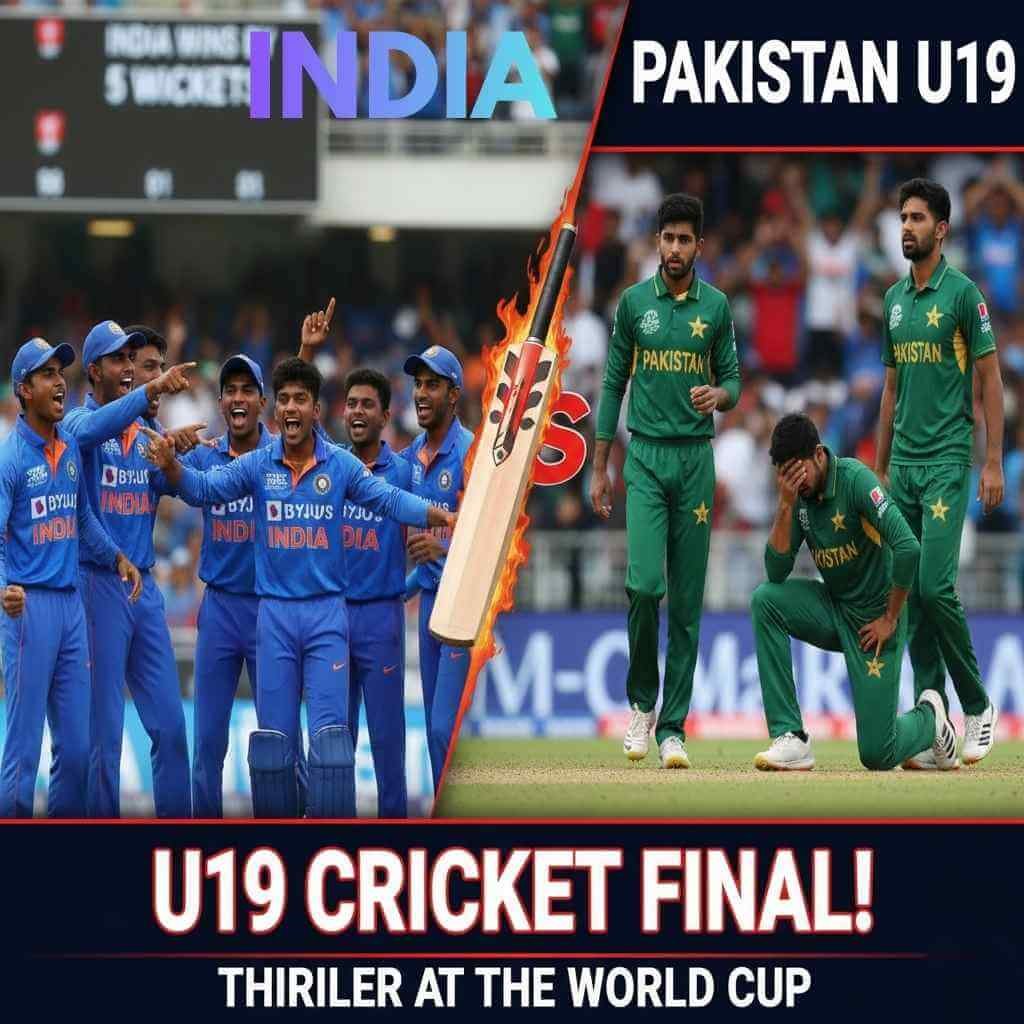
The twelfth edition of the Asian Cricket Council (ACC) Men’s Under-19 Asia Cup culminated on December 21, 2025, in a high-stakes final that reaffirmed the geopolitical and sporting centrality of the India-Pakistan rivalry within the global cricketing ecosystem. Staged at the ICC Academy Ground in Dubai, the final served as more than a mere continental title decider; it was a high-resolution snapshot of the developmental trajectories of two of the world’s most prolific talent pipelines as they prepare for the 2026 ICC Under-19 World Cup. India, the most successful team in the tournament’s history with eight previous titles, entered the final as the dominant force, while Pakistan sought to dismantle the “Big Brother” narrative that had characterized their recent meetings at this level. The encounter was defined by a historic individual performance from Pakistan’s Sameer Minhas, who shattered the record for the highest individual score in an Under-19 Asia Cup final, and a late-innings defensive resurgence by the Indian bowling unit that transformed a potential blowout into a tactical stalemate.
Historical Context and Continental Rivalry
The Under-19 Asia Cup has functioned as a critical litmus test for emerging talent since 1989. Historically, India has leveraged its robust domestic structure to dominate the competition, securing titles in 1989, 2013, 2016, 2018, 2019, and 2021. However, the landscape of Asian youth cricket has become increasingly multipolar. The 2024 edition saw Bangladesh emerge as champions after defeating India by 59 runs in the final, an event that recalibrated expectations for the 2025 cycle. Entering the 2025 final, India was aiming for a record-extending ninth crown (or twelfth by some historical counting methods including senior/junior overlaps), while Pakistan was hunting for their first title since sharing the trophy in 2012.
The rivalry between the two nations at the youth level is statistically weighted in favor of India. Prior to the 2025 final, the teams had met in 28 Youth ODIs, with India winning 16, Pakistan winning 11, and one match ending in a tie. However, the recent form guide suggested a closer contest; in their last five meetings, Pakistan had secured three victories, although India had comfortably won the most recent group-stage encounter earlier in the tournament by a margin of 90 runs.
Youth ODI Head-to-Head Statistics (Pre-Final)
Metric
India U19
Pakistan U19
Total Matches Played
28
28
Wins
16
11
Ties
1
1
No Results
0
0
Recent Form (Last 5)
L-L-W-W-L
W-W-L-L-W
Tournament Titles
8
1 (Shared)
The 2025 edition featured eight participants: India, Pakistan, United Arab Emirates, and Malaysia in Group A; and Bangladesh, Sri Lanka, Afghanistan, and Nepal in Group B. The group stages were played across two venues in Dubai: the ICC Academy Ground and the Sevens Stadium, both of which presented varying degrees of pace and bounce, influenced heavily by the relatively cool and dry December weather in the Middle East.
The Group A Trajectory: Foundations of the Rematch
India’s path to the final was characterized by a level of batting aggression that pushed the boundaries of the Under-19 format. The team crossed the 400-run mark twice in the group stages, a feat that underscored the depth of their top-order talent. In their opening match on December 12, India posted 433/6 against the UAE, powered by a breathtaking 171 from 14-year-old sensation Vaibhav Suryavanshi. This was followed by a 315-run demolition of Malaysia, where wicketkeeper-batter Abhigyan Kundu scored an unbeaten 209 off 125 balls, becoming the first Indian to score a Youth ODI double century.
Pakistan’s group stage was more volatile. While they registered a dominant 297-run victory over Malaysia, featuring centuries from Sameer Minhas and Ahmed Hussain, their campaign hit a significant roadblock on December 14 during their first meeting with India. In that encounter, which was reduced to 49 overs due to rain, India posted 240 runs and subsequently bundled out Pakistan for a mere 150 in 41.2 overs.
Group A Final Standings (December 2025)
Position
Team
Played
Won
Lost
Points
NRR
1
India U19
3
3
0
6
+4.023
2
Pakistan U19
3
2
1
4
+2.156
3
UAE U19
3
1
2
2
-0.156
4
Malaysia U19
3
0
3
0
-4.023
The group-stage defeat to India highlighted several tactical deficiencies in the Pakistani setup, particularly their inability to handle incisive off-spin and their tendency to lose wickets in clusters. India’s Deepesh Devendran and Kanishk Chouhan were the primary beneficiaries, taking three wickets each. However, Pakistan showed remarkable resilience in the semi-finals, overcoming a formidable Bangladesh side, while India dispatched Sri Lanka by eight wickets to set up the ultimate regional showdown.
Tactical Deployment: Pitch and Environmental Variables
The final was scheduled for a 10:30 AM IST start at the ICC Academy Ground. Environmental conditions in Dubai on December 21 were described as bright and sunny but cooler than typical Arabian summers, with an initial temperature of 15 degrees Celsius expected to rise as the day progressed. Analysts noted that the pitch offered significant carry, pace, and bounce, rewarding seamers who could hit the deck hard while providing a reliable surface for stroke-makers.
Indian captain Ayush Mhatre won the toss and elected to bowl first, a decision that reflected a “gamble” based on the hope that morning moisture and the fresh surface would provide early breakthroughs. This strategy was scrutinized by former Pakistani captain Salman Butt, who observed that if the bowling unit failed to strike in the first five overs, the decision to field could quickly become an “uphill task”. India opted for an unchanged XI, signaling confidence in the unit that had dominated the tournament, while Pakistan made a strategic adjustment, bringing in Niqab Shafiq for Daniyal Ali Khan.
Playing XI: India vs. Pakistan Final
India U19
Pakistan U19
Ayush Mhatre (C)
Sameer Minhas
Vaibhav Suryavanshi
Usman Khan
Aaron George
Ahmed Hussain
Vihaan Malhotra
Farhan Yousaf (C)
Vedant Trivedi
Hamza Zahoor (WK)
Abhigyan Kundu (WK)
Huzaifa Ahsan
Kanishk Chouhan
Niqab Shafiq
Henil Patel
Mohammad Shayan
Khilan Patel
Ali Raza
Deepesh Devendran
Abdul Subhan
Kishan Kumar Singh
Mohammad Sayyam
The Innings Narrative: Pakistan’s Offensive Surge
The opening phase of the Pakistani innings was a microcosm of the intense pressure surrounding the fixture. Henil Patel, the Indian pacer, provided an eventful second over that included a dropped catch and a massive six from Hamza Zahoor. A communication breakdown between Aaron George and Vedant Dwidedi (also referred to as Trivedi) led to George dropping a “sitter” at mid-on, providing Zahoor with an early reprieve. However, Patel redeemed himself in the fourth over, dismissing Zahoor for 18 runs after a mistimed shot was caught by skipper Ayush Mhatre.
Following the loss of the first wicket at 31/1, Pakistan’s Sameer Minhas and Usman Khan began a systematic deconstruction of the Indian bowling attack. Minhas, who entered the final as the tournament’s leading run-scorer with 299 runs, displayed a level of technical elegance and situational awareness that appeared to “shellshock” the Indian side. The pair added 92 runs for the second wicket, navigating the transition from pace to spin with high efficiency.
By the end of the first powerplay, Pakistan reached 79/1, scoring at nearly eight runs per over. India’s fielding, usually a pillar of their dominance, began to falter under the sustained pressure. Khilan Patel dropped a simple return catch from Usman Khan in the 15th over, marking India’s third major fielding lapse of the morning. Although Khilan Patel eventually secured Usman Khan’s wicket for 35 in the 17th over—thanks to a catch by Kishan Kumar Singh that was nearly spilled on the boundary—the momentum remained firmly with Pakistan.
Record-Breaking Individual Performance: The Minhas Epoch
The second and third quarters of the innings belonged entirely to Sameer Minhas. His innings was not merely a contribution to a team total but a historically significant event that rewrote the record books of the Under-19 Asia Cup. Minhas reached his half-century in the 13th over as Pakistan crossed the 100-run mark in just 75 balls. His century arrived in the 29th over, taking only 71 balls and featuring 12 boundaries and four sixes.
Minhas’s partnership with Ahmed Hussain was the defining tactical block of the match. The duo added 137 runs, with Hussain playing a disciplined anchor role (56 off 72) while Minhas “tore into the Indian attack”. This partnership pushed India into a “toothless” state, as captain Mhatre cycled through four bowlers with minimal effect.
Sameer Minhas: Milestone Progression in the Final
Milestone
Overs
Balls Faced
Scoring Shot
50 Runs
12.3
33
Single to deep mid-wicket
100 Runs
29.0
71
Boundary off Deepesh Devendran
130 Runs
34.2
88
Mixed boundaries/rotation
150 Runs
41.1
105
Boundary off Kanishk Chouhan
172 Runs (Final)
42.5
113
Caught at long-on
Minhas’s final score of 172 off 113 balls, studded with 17 fours and nine sixes, established several new benchmarks. He became the first player in the world to score over 450 runs in a single edition of the Youth Asia Cup at an average exceeding 200. His 172 was the highest-ever individual score in an Under-19 Asia Cup final, surpassing the previous bests and leaving the Indian Colts “reeling”.
Defensive Calibration: India’s Bowling Response and Middle-Order Choking
As the Pakistani total approached 300, a massive shift occurred. With Pakistan at 302/3 in the 43rd over, the game seemed to be slipping toward a target of 350+. However, India’s primary strike bowler, Deepesh Devendran, who had entered the match as the tournament’s leading wicket-taker but had struggled for rhythm, finally delivered a breakthrough.
After being hit for two sixes and a four by Minhas in the 43rd over, Devendran induced a mistimed shot that was caught at long-on by Kanishk Chouhan. The catch was met with an emotional release, as Chouhan threw the ball to the ground in anger, signaling the frustration and relief of the Indian side. This wicket triggered a “domino effect”.
In the subsequent 15 deliveries, Pakistan lost four wickets for just 17 runs. The middle and lower order, including captain Farhan Yousaf and Huzaifa Ahsan, failed to capitalize on the platform laid by Minhas.
Indian Bowling Performance Summary (First Innings)
Bowler
Overs
Maidens
Runs
Wickets
Economy
Khilan Patel
10.0
0
44
2
4.40
Henil Patel
7.1
0
43
2
6.00
Deepesh Devendran
8.0
0
74
2
9.25
Kanishk Chouhan
10.0
0
72
1
7.20
Kishan Kumar Singh
3.4
0
36
0
9.81
Khilan Patel emerged as the most disciplined Indian bowler, maintaining an economy of 4.40 while dismissing the set Ahmed Hussain for 56. Henil Patel and Deepesh Devendran provided the late-innings “fightback” that saw Pakistan slip from a dominant 302/3 to 319/7 by the 46th over.
Psychological Warfare and Fielding Efficiency
The final was played under the shadow of significant psychological pressure. The “fiery send-off” from Henil Patel to Hamza Zahoor in the early stages set a tone of high emotion that occasionally disrupted India’s tactical discipline. The three dropped catches and several misfields indicated a team struggling to reconcile their favorite status with the reality of a marauding Sameer Minhas.
However, the “muted celebration” from Ayush Mhatre after catching Ahmed Hussain in the 38th over suggested a recalibration of focus. India’s ability to pull back the run rate—conceding only 17 runs while taking four wickets in the final stretch—was a testament to their psychological resilience and the effectiveness of their death-bowling variations. Pakistan, conversely, faced a “mini heart attack” in the 41st over when a run-out chance against Minhas was missed only because the direct hit failed to connect.
Regional Implications and the Pathway to the 2026 ICC Under-19 World Cup
The performance of individuals in this final carries profound implications for the 2026 ICC Under-19 World Cup. Sameer Minhas has established himself as arguably the premier age-group batter in Asia, possessing the ability to dominate top-tier pace and spin in equal measure. For India, the tournament highlighted the immense potential of Abhigyan Kundu and Vaibhav Suryavanshi, both of whom have rewritten historical scoring records during this campaign.
Tactically, the 2025 Asia Cup has demonstrated that the Under-19 format is evolving toward a high-aggression model. India’s decision to frequently attempt 400+ totals and Pakistan’s reliance on extremely high-strike-rate openers reflect the influence of the senior T20 landscape on youth ODI cricket.
Tournament Statistical Leaders (At the Conclusion of Pakistan’s Innings)
Category
Player
Team
Value
Most Runs (Tournament)
Sameer Minhas
Pakistan
462*
Highest Individual Score
Abhigyan Kundu
India
209*
Most Wickets (Tournament)
Deepesh Devendran
India
13
Most Wickets (Tournament)
Abdul Subhan
Pakistan
11
High Strike Rate (Final)
Sameer Minhas
Pakistan
152.21
As the match moved into the second innings with Pakistan at 319/7, the tactical burden shifted to the Indian batters to execute a historic chase and to the Pakistani bowlers to maintain the discipline they had shown in the semi-finals. The final not only determined the 2025 Asian champion but also set the benchmark for the technical and psychological standards required for global success in the upcoming World Cup cycle.
Analytical Synthesis of the Final Stand-off
The 2025 Under-19 Asia Cup final between India and Pakistan was a spectacle of divergent strategies. India’s reliance on a well-rounded, balanced unit that remained undefeated throughout the tournament clashed with Pakistan’s reliance on spectacular individual brilliance and late-blooming momentum.
The Pakistan innings total of 319/7 represents a substantial hurdle. In the history of Under-19 Asia Cup finals, chasing a target exceeding 300 is an extremely rare feat, although India’s previous scores in the tournament (433/6 and 408/7) suggest they possess the firepower required. The key to the chase likely lies in the hands of India’s top four—Mhatre, Suryavanshi, George, and Malhotra—who must navigate an opening spell from Pakistan’s Mohammad Sayyam and Abdul Subhan that had previously demolished the Pakistani top order in the group stage.
Ultimately, the match served as a profound reminder of the volatility and talent present in Asian youth cricket. From Sameer Minhas’s historic 172 to Deepesh Devendran’s tournament-leading 13 wickets, the final was a showcase of future international stars performing under the highest possible pressure. The result of the second innings will decide the title, but the performances recorded in the first have already fundamentally altered the historical record of the competition.
The strategic takeaway for regional analysts is the closing of the gap between the traditional powerhouses and the emerging challengers. While India remains the team to beat, the resurgence of Pakistan and the defending-champion status of Bangladesh prior to this tournament indicate a healthy, competitive ecosystem that will likely dominate the 2026 ICC Under-19 World Cup.