We often think of the “genius” as a figure confined to a library or a laboratory, solving static equations in silence. However, modern neuroscience has shattered this stereotype. The reality is that high-performance athletics often demand a level of intellectual processing that rivals, and sometimes exceeds, the demands of rocket science or grandmaster chess. When we analyze the Top Sports for the Genius Mind, we aren’t just looking for physical strength. We are looking for computational power, executive control, and rapid information processing.
The concept of “Athletic Intelligence” is real and measurable. It involves spatial reasoning, working memory, and the ability to regulate emotions under extreme pressure. Through neuroplasticity, elite competitors physically restructure their brains to optimize for these specific tasks. This deep dive moves beyond subjective opinions to rank and analyze the ten disciplines that represent the pinnacle of human cognitive potential.
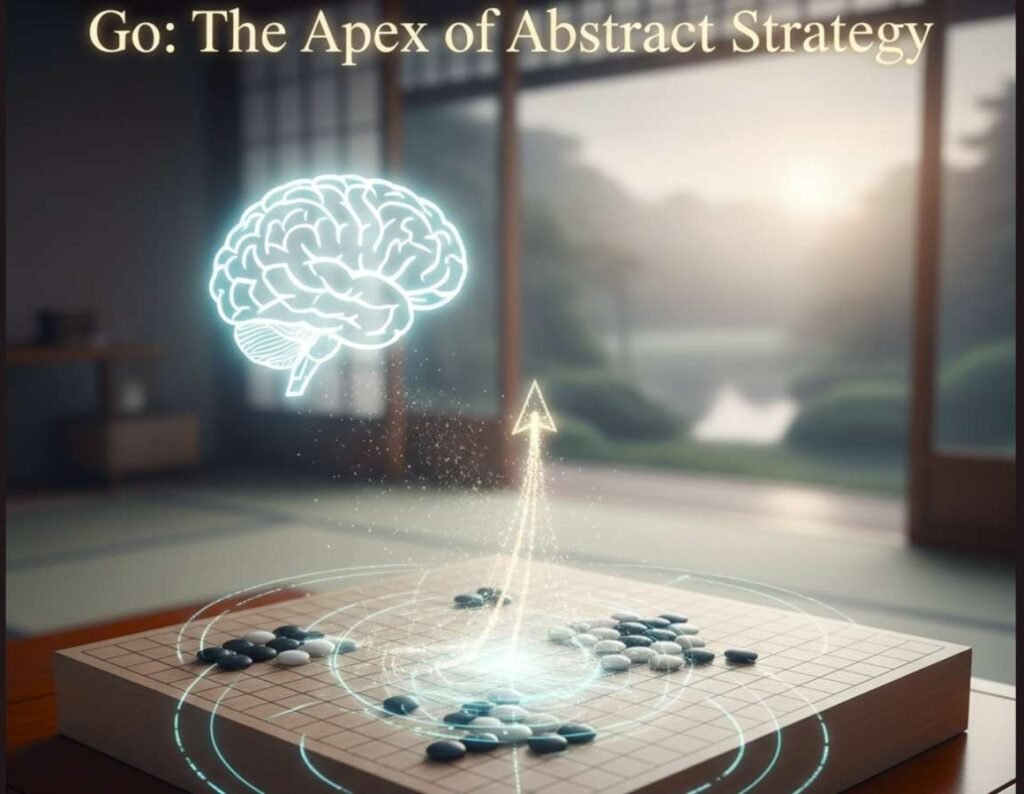
Go: The Apex of Abstract Strategy
If we are measuring pure combinational complexity, the ancient Chinese board game of Go stands alone at the top. While Western Chess is often the default metric for strategy, Go represents a higher order of magnitude in terms of search space. The number of legal board positions in Go is calculated to be approximately $2.1 \times 10^{170}$. To put that into perspective, that figure vastly exceeds the number of atoms in the observable universe. This immense scope renders brute-force calculation impossible for the human mind.
Instead of simple calculation, Go players rely on deep “reading” and high-level intuition. Unlike Chess, where pieces have hierarchical values, every stone in Go is identical and static once placed. Its value is derived entirely from its spatial relationship to other stones on the board. This forces the player to predict move sequences while simultaneously maintaining a “whole-board” perspective. You aren’t just capturing a king; you are defining territory in a fluid, expanding ecosystem.
Neuroimaging studies have shown that this game rewires the brain in distinct ways. Long-term engagement with Go enhances white matter integrity, which acts as the information highway of the central nervous system. These structural changes occur in areas associated with visual-spatial processing and intuitive judgment. The victory of AI systems like AlphaGo over human masters highlighted this depth. The algorithms required to master Go had to mimic human neural networks, suggesting that human masters are essentially running biological deep-learning models in their heads.
Formula 1: High-Velocity Neuro-Athleticism
Formula 1 is frequently mischaracterized as a test of reflexes and mechanical skill. In reality, it is a high-speed math problem solved under life-threatening conditions. An F1 driver processes information at speeds exceeding 200 mph, making decisions in milliseconds while subjected to G-forces that drain blood from the brain. The cognitive load here rivals that of fighter pilots, but with a crucial difference in duration.
While a fighter pilot might engage in short bursts of high-intensity dogfighting, an F1 driver must maintain a “reflexive flow” state for up to two hours. Their reaction times average around 0.16 seconds, which is comparable to Olympic sprinters. However, they must maintain this precision while managing hundreds of micro-adjustments per lap. They manipulate a steering wheel with over 20 distinct controls, adjusting brake bias and differential settings while listening to radio communications and calculating fuel management.
Research utilizing fMRI scans on professional drivers has identified specific structural adaptations in the retrosplenial cortex. This brain region is critical for storing observer-independent spatial maps. It allows the driver to navigate the track not just by reacting to what they see, but by accessing a highly detailed internal model of the circuit. Interestingly, professional drivers show less neural activation than novices during driving tasks. This indicates “neural efficiency,” meaning their brains have automated complex motor patterns to free up the frontal cortex for strategic thinking.
Chess: The Geometry of Logic
While Go dominates in abstract patterns, Chess remains the gold standard for concrete calculation and memory organization. The cognitive profile of a Grandmaster is one of the most studied phenomena in psychology. The superiority of a Chess genius is not necessarily rooted in raw general intelligence, but in the organization of long-term memory.
This phenomenon is explained by “Chunking Theory.” Masters do not memorize individual piece locations. Instead, they perceive the board in clusters or “chunks” of pieces related by function and strategic potential. A Grandmaster is estimated to have stored between 10,000 and 100,000 distinct patterns in their long-term memory. This library allows them to bypass the limited capacity of working memory. When they look at a board, they see a coherent narrative rather than a snapshot of unrelated pieces.
This capability creates a robust “visuospatial sketchpad,” allowing elite players to play blindfold chess or multiple games simultaneously without seeing the boards. The game demands a form of intellectual honesty where players must constantly falsify their own hypotheses. They calculate logic trees to depths of 15 or 20 moves, requiring immense mental endurance. Neuroimaging shows that high-level players recruit the caudate nucleus more intensely than novices, focusing on goal-directed behavior rather than the encoding of new information.
StarCraft II: The Multitasking Singularity
In the world of eSports, StarCraft II is widely regarded as the most cognitively demanding discipline. It is often described as high-speed chess but with the added layers of real-time execution and imperfect information. Unlike turn-based games, StarCraft II imposes a severe time constraint on every single decision. Top players maintain an Actions Per Minute (APM) rate of 300 to 600. This translates to executing five to ten precise commands every single second.
This relentless pace trains the brain’s internal timing mechanisms. Players must manage resource gathering, unit production, and tactical combat simultaneously. This requires rapid “cognitive flexibility,” which is the ability to switch tasks without losing efficiency. Studies have shown that these players have enhanced connectivity in the frontoparietal networks, which control attentional shifting. Their brains are physically more efficient at processing visual information.
Furthermore, StarCraft II is a game of imperfect information due to the “Fog of War.” Players must constantly scout and infer the opponent’s strategy based on partial data. This requires a continuous process of Bayesian updating, where players calculate probabilities of an attack based on incomplete clues. The cognitive stack required to control an army of hundreds while managing a complex economy places this game at the pinnacle of digital mind sports.
Soccer: The 360-Degree Executive
Soccer is often celebrated for its physical athleticism, but the role of the central midfielder is a profound test of executive function. Neuroscientific assessments have pinpointed “game intelligence” as the primary differentiator between professional and amateur players. The genius of players like Xavi or Kevin De Bruyne lies in their spatial mapping and executive control.
Executive functions refer to the high-level processes that manage other cognitive abilities. In soccer, inhibition is paramount. A player must suppress the natural urge to pass to the nearest teammate to execute a more complex, delayed play. They must also exercise cognitive flexibility to adapt strategies instantly when the ball is turned over. Elite players score significantly higher on standardized tests of these functions than the general population.
The “scanning” behavior of elite midfielders is another marker of this genius. Research shows a direct correlation between the frequency a player checks over their shoulder and their pass completion rates. They are constantly solving dynamic geometric problems, calculating triangulation and velocity for twenty-one other players. They utilize the Action Observation Network to predict opponent movements before they happen, effectively living in the future.
Fencing: The Science of Deception
Fencing is colloquially known as “physical chess,” but it is more accurately a study in neurological exploitation. It combines the tactical depth of combat with the reaction speeds of sprinting. A core component of fencing strategy is the exploitation of the Psychological Refractory Period. This is the delay in the brain’s response to the second of two closely spaced stimuli.
Fencers use feints to force the opponent’s brain to process a false threat. While the opponent is processing the feint, the fencer launches the real attack. The opponent’s brain, bottled-necked by the refractory period, cannot process the second stimulus in time to parry. Mastery requires the manipulation of distance, timing, and opponent psychology. You must condition your opponent to react a certain way and then break that pattern to score.
Decisions in fencing are often made within milliseconds. This demands “open skill” processing, where the athlete must constantly adapt to an unpredictable opponent. This engages the premotor cortex and parietal lobes for rapid sensorimotor integration. Fencers must also inhibit their “flinch response” to avoid parrying too early. This precise temporal control is a hallmark of high cognitive control.
Poker: Game Theory and Emotional Regulation
Poker differentiates itself from Chess and Go because it is a game of imperfect information. This introduces variables of probability, risk assessment, and psychology. The modern elite poker player is essentially a mathematician who plays based on Game Theory Optimal (GTO) strategies. They calculate pot odds, implied odds, and equity distributions in real-time.
The genius of a poker player lies in their ability to ignore short-term results and focus on long-term mathematical expectations. This requires a profound understanding of statistics that often runs counter to human intuition. They must also engage in complex information hiding, inferring the “range” of hands an opponent might hold based on betting patterns. This is a complex Bayesian inference task performed under pressure.
Perhaps the most distinct cognitive demand is “Tilt Control.” This is the ability to maintain rational decision-making despite negative outcomes. When a player suffers a “bad beat,” the amygdala can override the logic centers of the brain. Elite players possess superior emotional regulation, maintaining peak cognitive function even under extreme psychological distress. They constantly monitor their own mental state, a skill known as metacognition.
Bridge: The Synergistic Memory Challenge
Contract Bridge is unique among mind sports because it requires partnership communication through a limited channel. It combines the memory rigor of Chess with the incomplete information of Poker and the social cognition of a team sport. The bidding phase of Bridge is essentially a coded conversation where players convey the strength and distribution of their hands using a complex system of conventions.
A Bridge player must remember every card played and infer the location of the remaining cards. This taxes working memory to its limit and requires the continuous updating of a mental model of the unseen hands. Unlike Chess, which is a one-on-one battle, Bridge requires you to be “in sync” with a partner. This involves “Theory of Mind,” which is the ability to interpret your partner’s intent behind a specific bid or play.
Research has highlighted Bridge as a potent tool for building cognitive reserve. The combination of social interaction, memory retrieval, and strategic planning has been shown to be protective against dementia. The preserved cognitive function of elderly competitive Bridge players strongly supports the “use it or lose it” hypothesis regarding brain health.
American Football: The Analytical Field General
The role of the NFL Quarterback is widely considered the most cerebral position in American sports. It combines physical execution with the pre-snap processing of a chess master. The cognitive testing of quarterbacks, using tools like the Wonderlic Test or S2 Cognition Test, is a staple of the draft process because processing speed is non-negotiable.
A quarterback has roughly 10 to 15 seconds at the line of scrimmage to analyze the defensive formation. They must identify the linebacker, predict the coverage, anticipate the blitz, and adjust protection schemes before the ball is snapped. Once the play begins, they have less than three seconds to process the chaotic movement of twenty-one other players. They must go through a progression of receivers while navigating a collapsing pocket.
This requires split-second decision-making that correlates with high scores on processing speed tests. Furthermore, the sheer volume of information a quarterback must memorize is staggering. An NFL playbook contains hundreds of plays with specific variations for every defensive alignment. Retrieving this semantic memory instantly while under the physical threat of a 300-pound defensive lineman requires exceptional mental fortitude.
Judo: The Somatic Problem Solver
Judo makes this list as the representative of “Grappling Intelligence.” Unlike striking sports that rely heavily on reflexes, grappling is a game of leverage, physics, and tactile problem-solving. A Judoka must solve a physics problem in real-time to unbalance an opponent who is actively resisting.
In Judo, visual information is often secondary to tactile feedback. The genius of a Judoka lies in sensing the opponent’s center of gravity and weight distribution through their grip. This engages the somatosensory cortex to a high degree. Grappling offers a continuous state space where positions flow into one another with infinite micro-variations. The athlete must have a deep library of techniques and the cognitive flexibility to chain them together.
Similar to Formula 1, Judo requires high-level cognition while under extreme physical stress. The ability to remain calm and think methodically while being strangled or pinned is a unique form of “somatic genius.” It requires a decoupling of the panic response from the logical problem-solving centers of the brain.
The Neuroplasticity of Excellence
A recurring theme across all these disciplines is the concept of neuroplasticity. The genius mind in sport is not merely born; it is built through years of deliberate practice. Whether it is the increased density of the retrosplenial cortex in F1 drivers or the efficient caudate nucleus in Chess Grandmasters, the brain physically restructures itself to meet the demands of the sport.
This raises the question of transferability. While the debate continues on whether these skills transfer to unrelated fields, the evidence for “near transfer” is strong. The emotional control learned in Poker, the strategic planning of Go, and the multitasking of StarCraft II cultivate cognitive habits that are highly applicable to complex real-world problem-solving.
Conclusion
The analysis of the Top Sports for the Genius Mind reveals that intelligence in sport is not a singular entity. It manifests in various forms: the abstract calculation of the Go board, the hyper-processing speed of the F1 cockpit, the creative architecture of the soccer midfield, and the probability mastery of the poker table.
Go stands as the purest test of abstract intellectual depth, while Formula 1 and StarCraft II represent the pinnacle of processing speed and multitasking. Soccer and American Football demonstrate the application of intelligence in dynamic, spatial environments, while Poker and Bridge highlight the necessity of probabilistic and social intelligence. Ultimately, these sports do not just reveal genius; they demand it. They require the human brain to operate at the absolute limits of its capacity.